Agra Beyond the Taj: A Time-Travel Guide with Heart
The first light slides over the Yamuna like a silk ribbon. For a heartbeat, the Taj Mahal seems to glow from within—marble turning honey, then pearl, then the familiar cool white you’ve seen in a thousand photos but never truly felt. A caretaker sprinkles water to settle the dust. A mynah chirps. Somewhere behind you, a guide whispers a line you’ve heard quoted before, but it feels different in this quiet:
“A teardrop on the cheek of time.” — Rabindranath Tagore
Agra is full of these moments—grand and intimate, thunderous with history and hushed with detail. Come for the Taj Mahal, of course. But stay for the forts that once guarded emperors, the ghost city that tells a story of ambition and abandonment, and the living traditions—craft, cuisine, and community—that carry Mughal heritage into the present.
This Agra travel guide covers the Taj Mahal, Agra Fort, Fatehpur Sikri, and more—with Taj Mahal sunrise tips, route options, smart timing, and a relaxed plan.
Why Agra Feels Like an Adventure Through Time
Agra was once the heart of the Mughal Empire, a city where emperors built not just monuments, but an entire language of stone—geometry, symmetry, light, and water choreographed into palaces and mausoleums. Three UNESCO World Heritage Sites lie within easy reach here: the Taj Mahal, Agra Fort, and Fatehpur Sikri. They’re not just “must-sees.” They’re chapters of one story you can actually walk through.
History here is a tactile thing. It’s the cool touch of polished marble at dawn. It’s the warm sandstone that seems to drink in the afternoon sun. It’s the precise inlay work—pietra dura—so delicate you’ll swear the flowers are real. And it’s the Yamuna River, witness to centuries of devotion and power.
At a Glance
- Best time to visit Agra: October–March for cooler days; winter fog can soften sunrise views.
- Ideal duration: 1.5–2 days. Use our relaxed 1.5-day plan or stretch to an Agra itinerary 2 days with Fatehpur Sikri.
- Must-sees: Taj Mahal, Agra Fort, Fatehpur Sikri. Don’t miss Itmad-ud-Daulah, Sikandra, and Mehtab Bagh.
- How to get to Agra from Delhi: Yamuna Expressway (by car) or fast trains like the Gatimaan Express or Shatabdi Express.
- Good to know: The Taj is closed on Fridays. Tickets often have a 3-hour window from entry time. The main mausoleum requires a separate add-on ticket.
The Taj Mahal: Love, Light, and Immaculate Symmetry
No matter how prepared you think you are, the Taj Mahal disarms you. It was commissioned by Emperor Shah Jahan in 1632 for his queen, Mumtaz Mahal, and completed over the next two decades by a workforce whose names history rarely records, though their hands quite literally set the standard for beauty.
What Makes It So Astonishing
Stand at the main gate and look straight down the axis of the Charbagh gardens. The design is a masterclass in symmetry—buildings mirrored left-right, minarets perfectly placed—but the genius lies in the details.
- The calligraphy on the great portal isn’t uniform; letters grow subtly larger as they rise, a trick that makes the script appear the same size from your vantage point.
- Pietra dura inlays—carnelian, lapis, jasper—are fit into marble with hairline precision, their polished surfaces catching the light.
- The minarets lean fractionally outward. It’s a graceful safety measure: in an earthquake, they would fall away from the central tomb.
Architectural historians often call this the crowning jewel of Mughal architecture. UNESCO goes further, praising it as a universally admired masterpiece—the “jewel of Muslim art in India.” It’s one of those rare places where the hype is not just justified, it’s insufficient.
The Story in the Stone
The Taj Mahal is so often reduced to a symbol of love that it’s easy to forget it’s also a symbol of empire—its wealth, its artisans, its ambitions. The Mughal aesthetic prized balance and paradise imagery, and here the garden becomes a metaphor for eternity. Yet inside the mausoleum, the space is intimate. You’ll see a cenotaph draped in carved latticework, while the actual graves lie below, in accordance with tradition.
What deepens the experience is how the Taj changes with the sky. Dawn softens it. Midday makes it sharp and brilliant. Sunset warms it, and on full moon nights, if you time your visit, the monument takes on a spectral glow. Each version feels like a different personality of the same legend.
Making Sunrise Yours
If you can, go at sunrise. It solves several problems at once: cooler temperatures, better light for photography, and fewer people. On many days, that first hour feels almost private—a gift in a place that welcomes millions each year. Book your ticket online in advance; it saves time and often grants access to shorter lines. Pack light. Security is strict, and items like tripods, big bags, and food are typically not allowed inside. These Taj Mahal sunrise tips are simple but powerful: arrive early, enter as the gates open, and let the light find you before you start shooting.
When you step through the main gateway and see the Taj framed like a painting, resist the urge to rush. Let your eyes adjust. Notice the reflection pools. Explore the symmetry: the mosque on one side, the guest house on the other. Photographers love the arched corridors of the mosque for framing shots, and the gardens offer lovely angles that aren’t as overrun as the central axis.
A classic vantage spot is the marble bench near the central water channel—the one immortalized by countless cover shots. Be patient if there’s a line. Your moment will come, and the photo will mean more if you took a few minutes to simply look first.
Practical Pointers for the Taj Mahal Experience
- The Taj Mahal is closed on Fridays for prayers. Plan accordingly.
- Tickets may be time-slotted, and a 3-hour visit limit is commonly enforced from entry. Check your ticket details and arrive early within your window.
- The main mausoleum chamber requires a separate add-on ticket. Shoe covers are provided for interior areas; use them instead of going barefoot.
- Night viewing is offered on select full-moon nights (typically the full moon, plus two nights before and after), except Fridays and certain holidays. Tickets are limited and must be purchased in advance; viewing slots are short.
- Dress comfortably and modestly, especially if you plan to visit religious structures on the same day.
- For crowd-averse travelers, an alternate view awaits across the river at Mehtab Bagh. It’s perfect at sunset and feels far less hurried.
- Photography notes: inside the main mausoleum chamber, photography is restricted and flash is prohibited. Outside, drones and tripods are generally not allowed.
Accessibility & Etiquette at the Taj
- Wheelchairs are available at the gates (often with a refundable deposit). Battery carts operate from parking areas to entrances.
- Step-free routes cover the gardens and most paths. Stairs lead up to the marble plinth and inner chamber; assistance may be required.
- Surfaces can be slick with dew at sunrise. Wear shoes with good grip.
- Respect quiet zones around tombs and active places of worship. Keep voices low and avoid touching inlay work; oils can stain marble.
“There are two kinds of people in the world—those who have seen the Taj Mahal and love it, and those who have not seen the Taj and love it.” — attributed to Bill Clinton
Whether you see it at dawn or dusk, give yourself permission to linger. Yes, there are more sites to see in Agra, but this is the heart of your adventure.
Agra Fort: The Empire’s Storybook in Red Sandstone
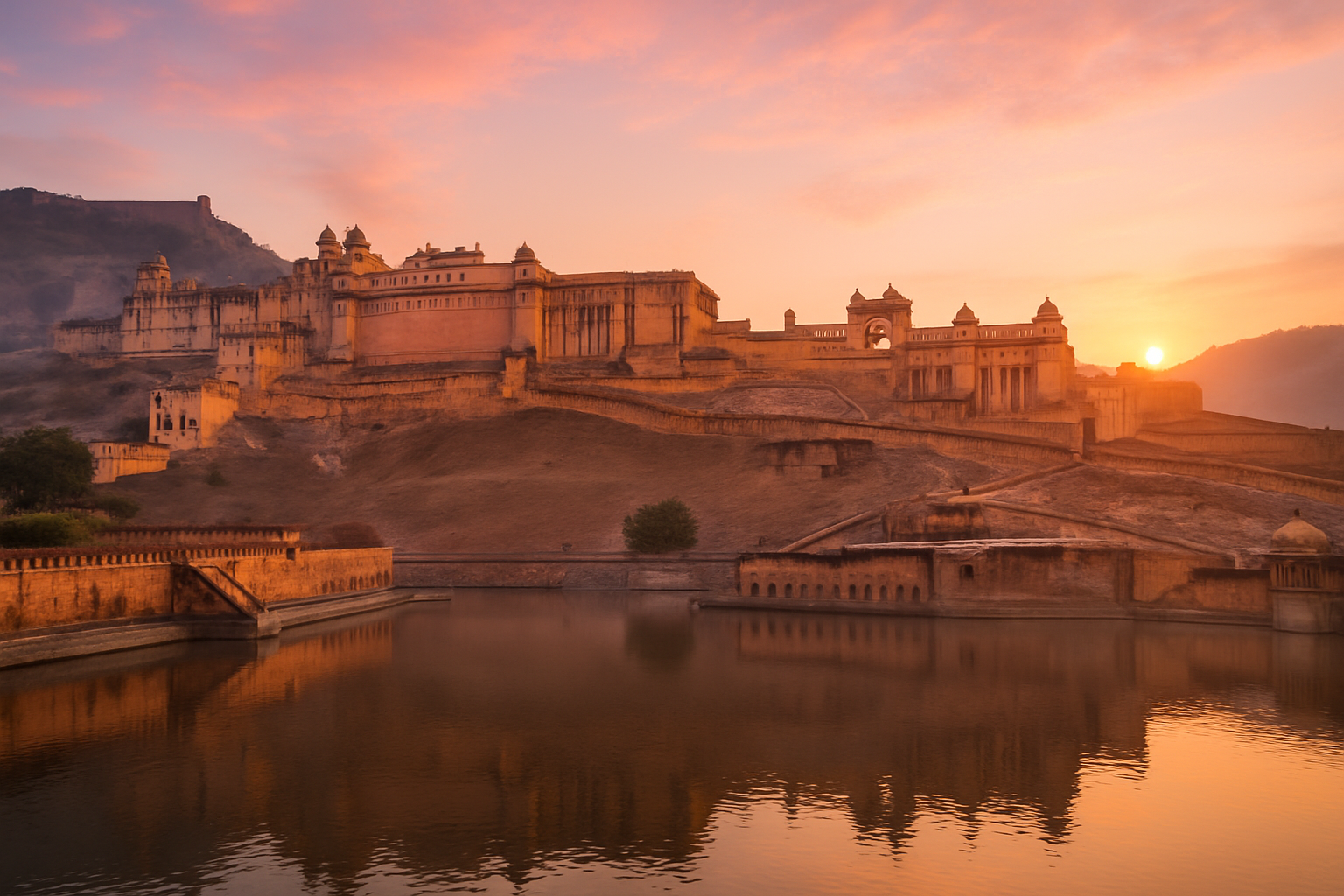
A few kilometers from the Taj, Agra Fort unfolds like a small city within walls—a warren of palaces, audience halls, and balconies angled to catch breezes and views. Step inside, and the chatter of the 21st century flattens into the echo of footsteps in long corridors. This is where the Mughal Empire flexed its administrative muscles, received envoys, and staged the daily theater of power.
A Walk Through Power and Intrigue
Akbar began this fort in the late 16th century, building in the rich red sandstone that gives it such presence. Later, Shah Jahan added marble palaces—his aesthetic signature. The contrast tells a story: solidity and expansion under Akbar, refinement and flourish under Shah Jahan.
Start at the Diwan-i-Aam, the Hall of Public Audience. It’s an open, columned space where the emperor met petitioners—a kind of majestic town hall. Nearby, the Diwan-i-Khas hosted private audiences, where power moved not with shouting but with whispers.
Don’t miss the Jahangiri Mahal, a palace with intricate brackets and carvings that hint at a blend of influences. And then there’s the Musamman Burj, the octagonal tower overlooking the river. This is where Shah Jahan is said to have been confined by his son, Aurangzeb, during his final years—a father, an emperor, and a man with a view of the tomb he built for his beloved. On a clear day, you can see the Taj from here, a white punctuation mark at the end of the river’s sentence.
A historian once remarked that to understand the Mughals, you must walk the length of Agra Fort. The scale is human, not overwhelming—two hours is often enough for a thoughtful visit—yet the stories it contains open like doorways. Consider hiring an official guide or using an audio guide; the context adds richness to what you see.
Practical Tips for Your Fort Visit
- Mid-morning or late afternoon is ideal: softer light, less heat.
- Wear comfortable shoes; the complex is sprawling, with some uneven surfaces.
- Tripods are generally restricted; check current rules before you go.
- If you’re on a tight schedule, prioritize Diwan-i-Aam, Diwan-i-Khas, Jahangiri Mahal, and Musamman Burj.
Fatehpur Sikri: Akbar’s Dream, Etched in Stone
About 40 kilometers from Agra lies Fatehpur Sikri, a planned Mughal capital that flickered briefly and brightly in the 1570s before being abandoned, likely due to water scarcity and shifting priorities. A visit here feels like stepping into a city that paused mid-sentence.
The Grandeur of a Visionary City
The Buland Darwaza—“Gate of Victory”—announces itself first, a colossal portal cresting the skyline at about 54 meters. Climb its steps and pause halfway; turn around to see the countryside unfurling. Inside, the Jama Masjid anchors the complex, while the white marble tomb of the Sufi saint Salim Chishti shimmers like a pearl set in rust-red sandstone. Devotees tie threads on the marble screens, a gesture of hope carried through centuries.
Walk the palace complex and you’ll find a chessboard courtyard where it’s said Akbar played a human game of strategy, the Panch Mahal rising in airy tiers, and the Diwan-i-Khas with its extraordinary central pillar—carved like a tree of thought, ringing with balconies and platforms. The architecture here feels experimental, a syncretic blend of Hindu, Persian, and Islamic motifs that tells you exactly what kind of thinker Akbar was.
Visiting Without the Rush
Fatehpur Sikri rewards unhurried exploration, but it’s easy to tucker out in the midday heat. Aim for early morning or late afternoon. Bring water, a hat, and patience for the shuttle buses that ferry visitors from the parking area to the monuments. If you want context, hire a local guide on-site, choosing an officially registered one. The stories complete the city.
Beyond the Icons: Agra’s Other Mughal Marvels
If the Taj Mahal is poetry and Agra Fort the storybook, Agra’s lesser-visited sites are the footnotes that make the text sing.
Itmad-ud-Daulah: The “Baby Taj” with Jewel-Box Precision
Across the Yamuna, this delicate tomb predates the Taj and likely inspired it. Commissioned by Nur Jahan for her father, Itmad-ud-Daulah is all marble, all grace, and full of translucent screens and tiny inlay motifs—wine cups, flowers, geometric patterns. The scale is intimate, the gardens serene. Come mid-morning; you’ll often have space to linger over details that get lost in bigger monuments. Photographers love the riverbank angles here.
Akbar’s Tomb at Sikandra: A Philosophy in Stone
As the greatest consolidator of the Mughal Empire, Akbar left his legacy not just in conquests but in ideas. His tomb, set in a vast Charbagh, reflects that spirit—a fusion of motifs and materials, with a monumental gateway that announces both power and curiosity. The complex feels peaceful, and you might spot deer grazing in the grounds. It’s a good stop when entering or leaving the city by road.
Mehtab Bagh: The Moonlight Garden with the Perfect Frame
Directly across the river from the Taj, Mehtab Bagh aligns so perfectly that it’s easy to imagine Shah Jahan standing here, gauging the symmetry of his masterwork. Sunset brings softer light and fewer crowds. On days when the main complex feels hectic, this garden offers perspective—literally and metaphorically. The Taj becomes part of a larger landscape rather than the entire show, and that shift in scale can be unexpectedly moving.
The Living Legacy: Mughlai Flavors and Marble Inlay Crafts
Agra’s Mughal heritage isn’t just in stone. It simmers in pots and glints under lamplight in workshops.
What to Eat
Mughlai cuisine is hearty, aromatic, and unabashedly indulgent: think slow-cooked kebabs, creamy kormas, saffron-scented biryanis. In Agra, you’ll find restaurants serving classics alongside local favorites. Don’t skip Agra’s famous petha, a translucent sweet made from ash gourd—refreshing after a hot day of sightseeing. For breakfast, try bedhai with spicy potato sabzi, followed by jalebis still warm from the oil.
If you enjoy immersive experiences, consider a cooking lesson in a local home. Learning the logic of spices—how cloves and cinnamon create warmth, how cardamom lifts a dessert—connects you to the city in a different way. Travelers who’ve tried this often say it becomes their favorite memory, tied to aromas rather than architecture.
What to See and Buy
Marble inlay work is Agra’s signature craft, a direct descendant of the pietra dura that dazzles at the Taj. In small workshops, artisans still grind semi-precious stones and set them into marble by hand, using techniques passed down over generations. Watching the process—how slivers of stone become petals—adds a layer of appreciation when you return to the monuments.
If you plan to shop, look for government-certified emporiums or well-reviewed ateliers. Marble tabletops and boxes are classic, but smaller pieces like coasters or inlay jewelry can be easier to carry. Agra also has a reputation for leather goods and carpets. As always, compare, ask questions, and avoid high-pressure sales. The right piece should feel like it carries a story, not a sales pitch.
Planning Your Agra Adventure: From Trains to Time Slots
Agra slots neatly into India’s popular Golden Triangle route with Delhi and Jaipur. You can do it as a day trip, but if you can spare a night, staying over transforms the experience. It gives you a sunrise at the Taj, a cooler window for Agra Fort, and time for a sunset at Mehtab Bagh or a stroll through a craft workshop.
Getting There and Around
- How to get to Agra from Delhi: the Yamuna Expressway makes the drive smooth and fast. Fast trains like the Gatimaan Express and Shatabdi Express are efficient options, landing you in Agra Cantt with plenty of time for a full day.
- Within the city, e-rickshaws and auto-rickshaws are plentiful. Ride-hailing apps work, but for a multi-stop day, hiring a car with driver can be a time-saver.
- If you’re combining Fatehpur Sikri, plan transport ahead; it’s about an hour away, and you’ll want flexibility in your return.
Best Time to Visit
The best time to visit Agra is October to March—cooler air, clearer skies. Winter mornings can be foggy, which sometimes delays trains and softens sunrise views to a gentle haze. April to June brings serious heat. Monsoon months can be dramatic, with the marble gleaming under stormy skies, but plan for humidity and showers.
Tickets, Rules, and Sanity-Savers
- Buy tickets online for major sites. It speeds things up and helps you choose time slots.
- The Taj Mahal is closed on Fridays. Night viewing is offered on select full-moon nights; availability is limited and rules are stricter—plan well in advance.
- Expect airport-style security at entrances. Travel light; large bags and food are usually not allowed. Water bottles and small cameras are fine, but tripods and drones are off-limits.
- The Taj ticket often includes a 3-hour time limit from entry; the main mausoleum requires a separate add-on fee.
- Dress respectfully, carry a scarf or shawl for religious sites, and wear breathable fabrics.
- Beware of overzealous touts. If you want a guide, look for official badges or pre-book through reputable channels.
- Keep small change for tips and shoe storage at temples and mausoleums.
Myths and Facts: Separating Romance from Rumor
Stories cling to the Taj Mahal like morning mist. Some are beautiful. Some are persistent myths.
- The “Black Taj” legend—a proposed black marble twin across the river—is a romantic but unproven tale. Mehtab Bagh holds the alignment, but archaeology hasn’t confirmed a second mausoleum.
- The grim rumor that artisans had their hands cut off after building the Taj is widely disputed by historians. A more likely truth: skilled craftsmen were engaged on royal projects elsewhere.
- The Taj’s color isn’t just “white.” Pollution and weathering are real threats. Conservationists routinely treat the marble with a gentle mud-pack cleaning to restore its sheen without damage. It’s a quiet reminder that monuments need care, not just admiration.
Understanding these nuances doesn’t make the Taj less magical. It makes it more human. These places were made by people—visionary, flawed, brilliant—and they survive because other people care enough to protect them.
A One-and-a-Half Day Flow That Actually Feels Relaxed
Day one, arrive by late afternoon. Drop your bags, then head to Mehtab Bagh. Watch the Taj Mahal settle into evening, reflected in the Yamuna’s dusky water. There’s no pressure to do anything but look. Have dinner nearby—maybe a Mughlai spread—and sleep early.
Day two, wake before the birds. Sip something warm on your way to the Taj so that the gates opening feels like a curtain rising. Spend your precious morning hour wandering the gardens, tracing inlay with your eyes, listening to the muffled rhythm of footsteps under soaring arches. As crowds build, you’ll already have your best photos and memories.
Late morning, make your way to Agra Fort. A steady two-hour amble will take you through the great halls and into small moments—cool shadows, carved brackets, wind moving in from the river. Have lunch near the fort or in Sadar Bazaar, where you can peek at local life between bites. If energy allows, fit in Itmad-ud-Daulah or Sikandra in the afternoon; both are less crowded and reward unhurried gazing.
If you’re staying another night, consider Fatehpur Sikri early the next morning. The busier day-trippers won’t have arrived yet, and the city’s bones—the quiet steps, the ghostly courtyards—will be yours. If you’re planning an Agra itinerary 2 days, add a leisurely lunch, a craft workshop visit, and a second sunset at Mehtab Bagh.
Photographing Agra Without Losing the Moment
Photography is irresistible here, and social media has made certain angles feel essential. But Agra offers more than the “Diana bench” shot.
- Try framing the Taj through the mosque’s arches. The deep shadows add drama to the bright dome.
- Look for reflections—not just in the main pools, but in smaller puddles after rain or in polished marble at certain angles.
- At Agra Fort, shoot through jharokha windows toward the river. The geometry tells a story the wide-angle can’t.
- At Fatehpur Sikri, stand in the Diwan-i-Khas and look up; the central pillar reveals patterns your eyes may miss at first glance.
And for at least a few minutes at each site, tuck your camera away. Memory stores color differently than pixels do.
Responsible Travel: Leaving the Marble Brighter Than You Found It
Agra’s monuments are resilient, but not invincible. Pollution, weather, and sheer visitation take a toll. The city lies within a protected area designed to curb emissions—part of why the Taj still gleams after centuries. You can help, too.
- Use the provided shoe covers and stick to marked paths; oils from hands and feet can stain marble.
- Carry a reusable water bottle and use designated litter bins.
- Respect quiet zones, especially near tombs and active places of worship.
- Support artisans and guides who practice and preserve traditional skills.
A conservationist once told me, standing under the Taj’s shadow after a storm had toppled a small finial, that every repair is a love letter to the past. It’s hard not to feel the same when you see a craftsman set a sliver of carnelian into marble with the same care his grandfather used.
Common Agra Questions, Answered Quickly
- Is the Taj Mahal really worth getting up for at sunrise? Yes. Cooler, quieter, and the light is forgiving. If you can, do both sunrise at the Taj and sunset at Mehtab Bagh for two distinct moods.
- Can you do Agra as a day trip from Delhi? You can, especially by fast train or the expressway, but it will be a sprint. An overnight stay buys you calm and deeper experiences.
- Should I hire a guide? If you enjoy stories and want to notice details you’d otherwise miss, yes—especially at Agra Fort and Fatehpur Sikri. Choose officially registered guides.
- What should I wear? Comfortable, modest clothing; breathable fabrics; and good walking shoes. A light scarf is handy for religious sites and sun.
- Are there good views of the Taj outside the main complex? Mehtab Bagh is the classic riverfront view. Some rooftop cafés offer glimpses, but the garden is the serene, symmetrical option.
- Is Agra wheelchair-friendly? The Taj gardens and paths are generally navigable with assistance; the inner chamber requires stairs. Agra Fort and Fatehpur Sikri have uneven surfaces and steps; plan extra time and help.
The Moment You’ll Carry Home
On my last morning in Agra, the sky began in gray and ended in gold. A woman in a bright sari moved quietly across the garden paths; a gardener brushed dew from the marble so it wouldn’t stain. The Taj Mahal, for all its symmetry, felt unexpectedly alive. Behind me, a child asked his father, “Why is it so perfect?” The father didn’t answer. He just tilted his head, as if listening.
Agra invites that kind of listening—beyond the camera shutter, beyond the checklist. In the red depths of Agra Fort, the white blaze of the Taj, the windy tiers of Fatehpur Sikri, and the quiet discipline of a craftsman’s hands, you hear the city speak. It tells you that heritage isn’t a museum exhibit. It’s a living conversation between the past and whoever is standing here now, watching the light change.
That’s the real adventure. And it’s waiting as soon as you step through the gate.