Voyay walking tour

Echoes Around Zanzibar’s Slave Market

A reflective journey through bondage, resistance, abolition, and living memory

  • Zanzibar City, Tanzania
  • 10 stops
  • 117 min
  • 2.7 km
  • History

Free in the Voyay app

Get it in the app

Already have Voyay? Open this tour in the app

Echoes Around Zanzibar’s Slave Market12345678910
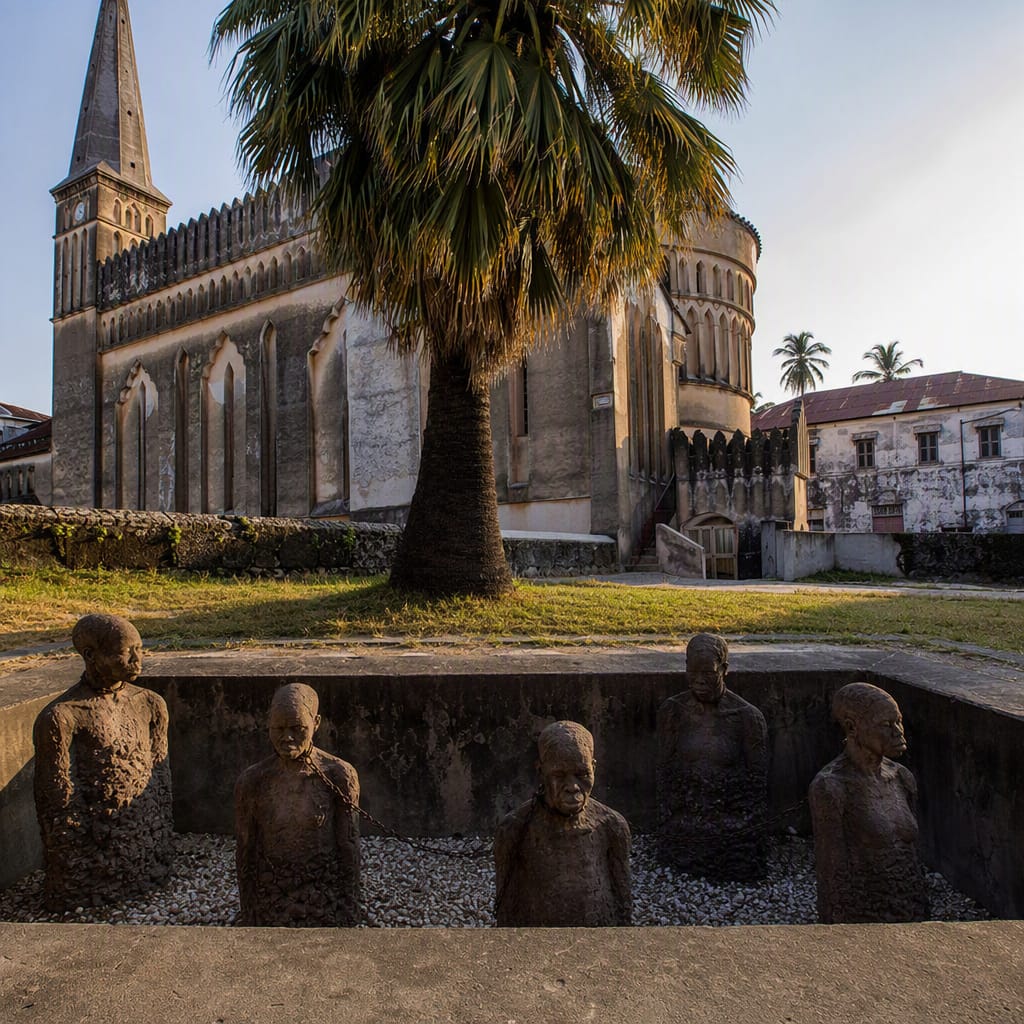
This thoughtful Stone Town walk explores the former slave-market precinct without reducing Zanzibar’s history to a single chamber, monument, or abolitionist hero. It places the market within a larger urban economy shaped by caravan routes, plantation labor, maritime trade, political power, and the actions of African, Arab, Swahili, Indian, and European participants. Beginning near Darajani, you follow narrow Mkunazini Street into the Anglican cathedral compound. The chambers, exhibition, memorial sculpture, cathedral, and mission courtyard invite close attention to both historical evidence and commemorative tradition. Along the way, you will distinguish the 1873 closure of the open market from the gradual abolition of legal slavery, especially the major emancipation decree of 1897. The route then connects elite architecture and inland commerce at Hamamni and Tippu Tip’s House before opening onto Forodhani’s maritime horizon. The Old Dispensary adds another layer through charity, customs, conservation, and Zanzibar’s diverse merchant society. Throughout the walk, enslaved people appear not only as victims but also as individuals who resisted, escaped, negotiated, worked, formed families, and survived. This tour suits historically curious travelers who appreciate careful interpretation, atmospheric streets, and time for reflection. It is worth taking slowly: the buildings are compelling, but the most important discoveries come from questioning familiar stories and recognizing how a living city carries difficult memory.

Try the first stop

Darajani Market
Photo: Wikimedia Commons
Free sample · Stop 1

Darajani Market

A bustling gateway into the commercial world surrounding nineteenth-century bondage.

Begin amid produce stalls, handcarts, spices, and shouted prices near Stone Town’s former creek. Although today’s market is not a documented slave-sale site, it reveals the busy commercial setting that sustained Zanzibar’s nineteenth-century economy. Notice how trade, transport, credit, and labor converged around this urban edge.

The route

10 stops, in order.

  1. Stop 1 · Free sample

    Darajani Market

    A bustling gateway into the commercial world surrounding nineteenth-century bondage.

  2. Stop 2

    Mkunazini Street

    A narrow corridor connecting commerce, captivity, and Zanzibar’s evolving urban memory.

  3. 3
    Stop 3

    Underground Slave Chambers

    Confronting underground rooms central to Zanzibar’s remembrance of captive suffering.

  4. 4
    Stop 4

    East African Slave Trade Exhibition

    Maps and testimony reveal captivity beyond Zanzibar’s most famous market.

  5. Stop 5

    Slave Market Memorial

    A powerful contemporary sculpture confronts dehumanization through an uneasy viewpoint.

  6. Stop 6

    Christ Church Cathedral

    An abolitionist cathedral rises directly over Zanzibar’s former slave-market precinct.

  7. 7
    Stop 7

    St Monica’s

    A quiet mission courtyard explores freedom, education, conversion, and institutional control.

  8. Stop 8

    Hamamni Persian Baths

    An elegant bathhouse complicates Sultan Barghash’s place in abolition history.

  9. Stop 9

    Tippu Tip’s House

    A merchant’s façade links Stone Town to violent inland caravan networks.

  10. Stop 10

    Forodhani Gardens

    A lively waterfront reveals the maritime routes behind Zanzibar’s trafficking economy.

The app guides you from stop to stop with GPS and plays each story when you arrive.

Walk Echoes Around Zanzibar’s Slave Market

Free in the Voyay app

Get it in the app

Already have Voyay? Open this tour in the app