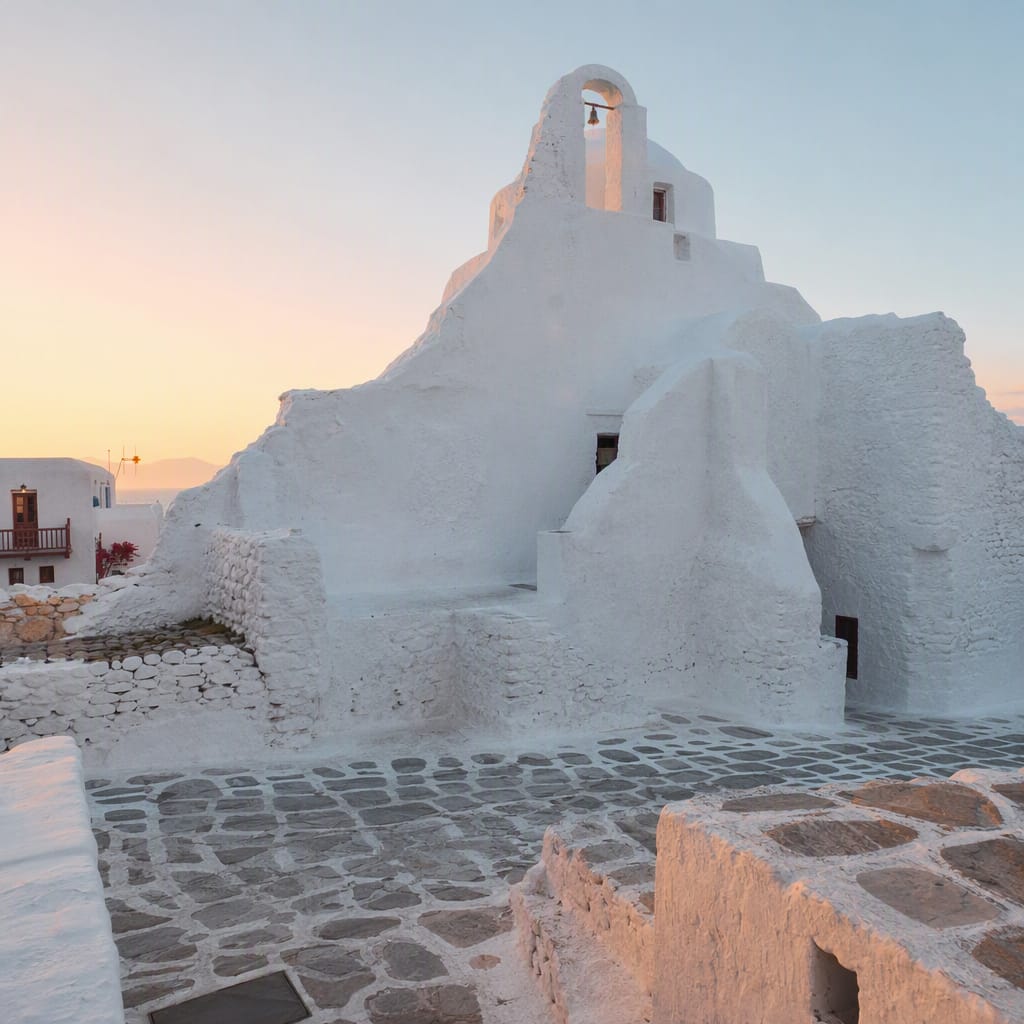
From Grain to Gusts
Trace sea-borne grain from busy lanes to wind-powered millstones
- Mykonos, Greece
- 10 stops
- 110 min
- 2.1 km
- History
Try the first stop
Alefkandra Shore
This breezy shoreline reveals how sea-borne grain reached Mykonos’s mill economy.
Begin beside the Aegean, the first highway in Mykonos’s grain supply chain. The island grew barley and some wheat, but maritime trade helped cover local needs. From the salty shore, look toward the windmill ridge and imagine sacks moving inland through the compact lanes above.
The route
10 stops, in order.
- 1Stop 1 · Free sample
Alefkandra Shore
This breezy shoreline reveals how sea-borne grain reached Mykonos’s mill economy.
- 2Stop 2
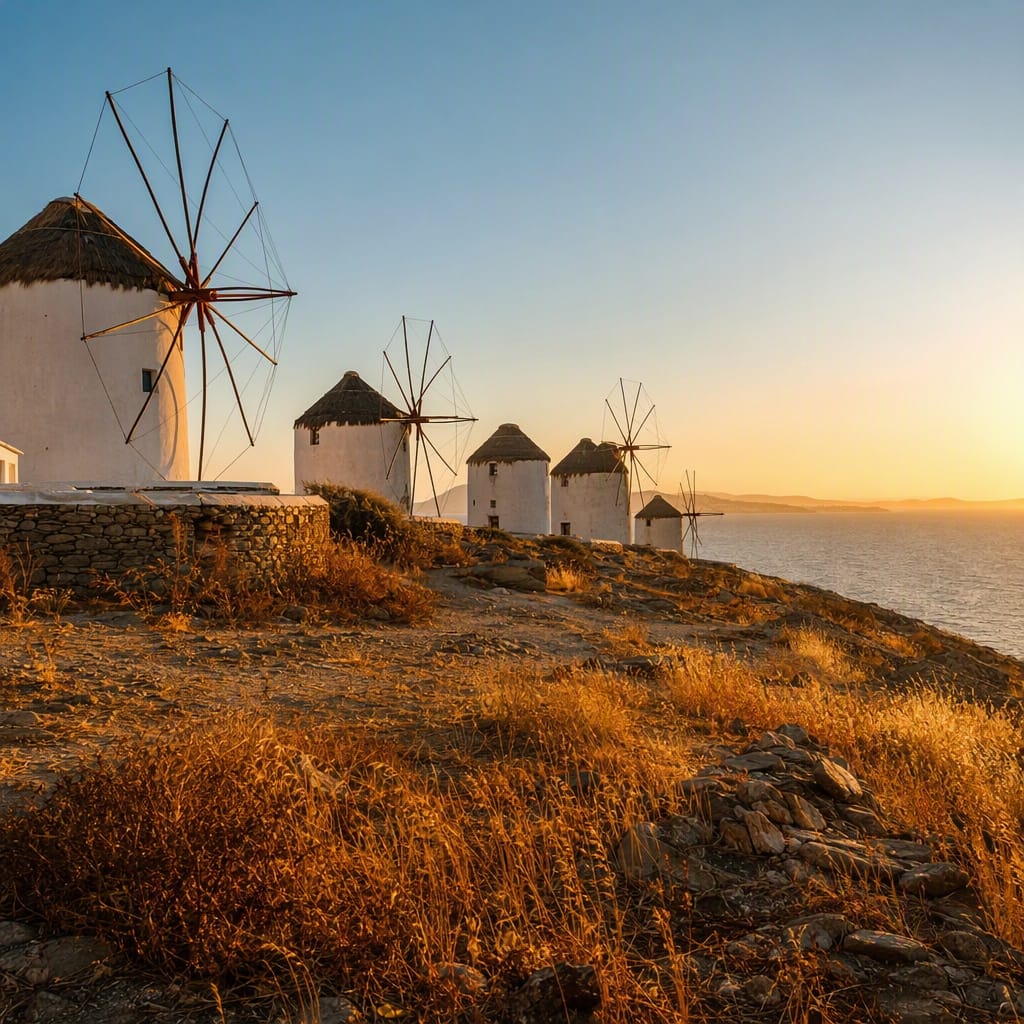
Kato Mili Windmills
Mykonos’s famous towers transformed powerful meltemi winds into flour for island households.
- 3Stop 3
Lakka Square
An open town hinge reveals how grain loads entered Mykonos’s narrow lanes.
- 4Stop 4
Gioras Bakery
A historic wood-fired bakery completes grain’s transformation from flour into fragrant bread.
- 5Stop 5
Tria Pigadia
Three historic wells uncover water’s essential role in breadmaking and daily survival.
- 6Stop 6
Manto Mavrogenous Square
This civic gateway connected arriving ship cargo with merchants, porters and town storerooms.
 Stop 7
Mykonos Old Port
A working harbor exposes the maritime network that kept Mykonos supplied with grain.
- 8Stop 8
Archaeological Museum of Mykonos
Ancient vessels reveal that Aegean storage and trade long predated Mykonos’s windmills.
- 9Stop 9
Kalogera Street
A climbing lane demonstrates how shade, shelter and tight corners shaped cargo movement.
- 10Stop 10
Boni’s Windmill
A restored hilltop mill reunites wind power, agricultural tools and Mykonos’s landscape.
The app guides you from stop to stop with GPS and plays each story when you arrive.