Who Owns Montreal’s Queer Village?
Resistance, remembrance, and reinvention along Sainte-Catherine Street East
- Montreal, Canada
- 12 stops
- 168 min
- 5.1 km
- History
Try the first stop
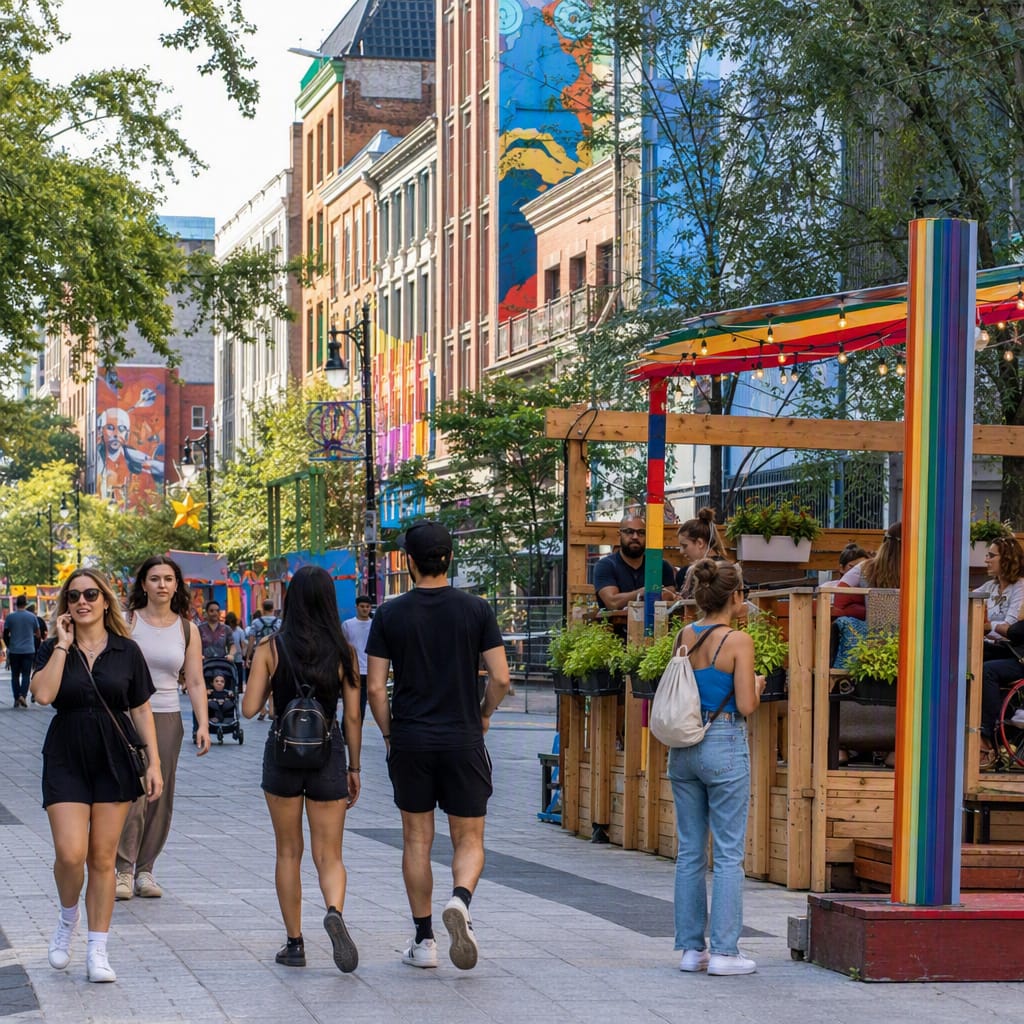
Galerie Blanc
An open-air gallery where public art reshapes the Village’s queer visibility.
Galerie Blanc turns the sidewalk into a free, always-accessible exhibition space. Its rotating installations reveal how queer communities use art, fashion, performance, and public space to become visible. Notice how reflections, weather, traffic, and surrounding businesses transform each work—and consider when cultural visibility becomes neighborhood branding.
The route
12 stops, in order.
- 1Stop 1 · Free sample
Galerie Blanc
An open-air gallery where public art reshapes the Village’s queer visibility.
 Stop 2
Grande Bibliothèque
Quebec’s public archive preserves the words behind decades of queer resistance.
 Stop 3
Place Émilie-Gamelin
A contested public square where protest, precarity, and queer urban life intersect.
 Stop 4
Rue Atateken
A renamed street connects queer reinvention with Indigenous memory and decolonization.
 Stop 5
Cabaret Mado
Francophone drag, sharp satire, and community showmanship command this celebrated cabaret.
- 6Stop 6
Sauna G.I. Joe
A discreet bathhouse reveals histories of sexual autonomy, surveillance, and survival.
 Stop 7
Saint-Pierre-Apôtre
A Gothic church shelters an intimate chapel honoring lives lost to AIDS.
 Stop 8
Parc de l’Espoir
Montreal’s AIDS memorial holds grief, activism, anger, and collective survival together.
- 9Stop 9
Aigle Noir
A longstanding leather bar protects subculture, chosen family, and unapologetic difference.
 Stop 10
Librairie L’Euguélionne
A feminist queer bookstore amplifies voices nightlife-centered histories often leave unheard.
 Stop 11
Écomusée du Fier Monde
A former public bath restores Centre-Sud’s working-class history to the Village story.
- 12Stop 12
Centre Communautaire LGBTQ+
Behind Village visibility, volunteers sustain essential queer knowledge, services, and connections.
The app guides you from stop to stop with GPS and plays each story when you arrive.
More tours in Montreal
See all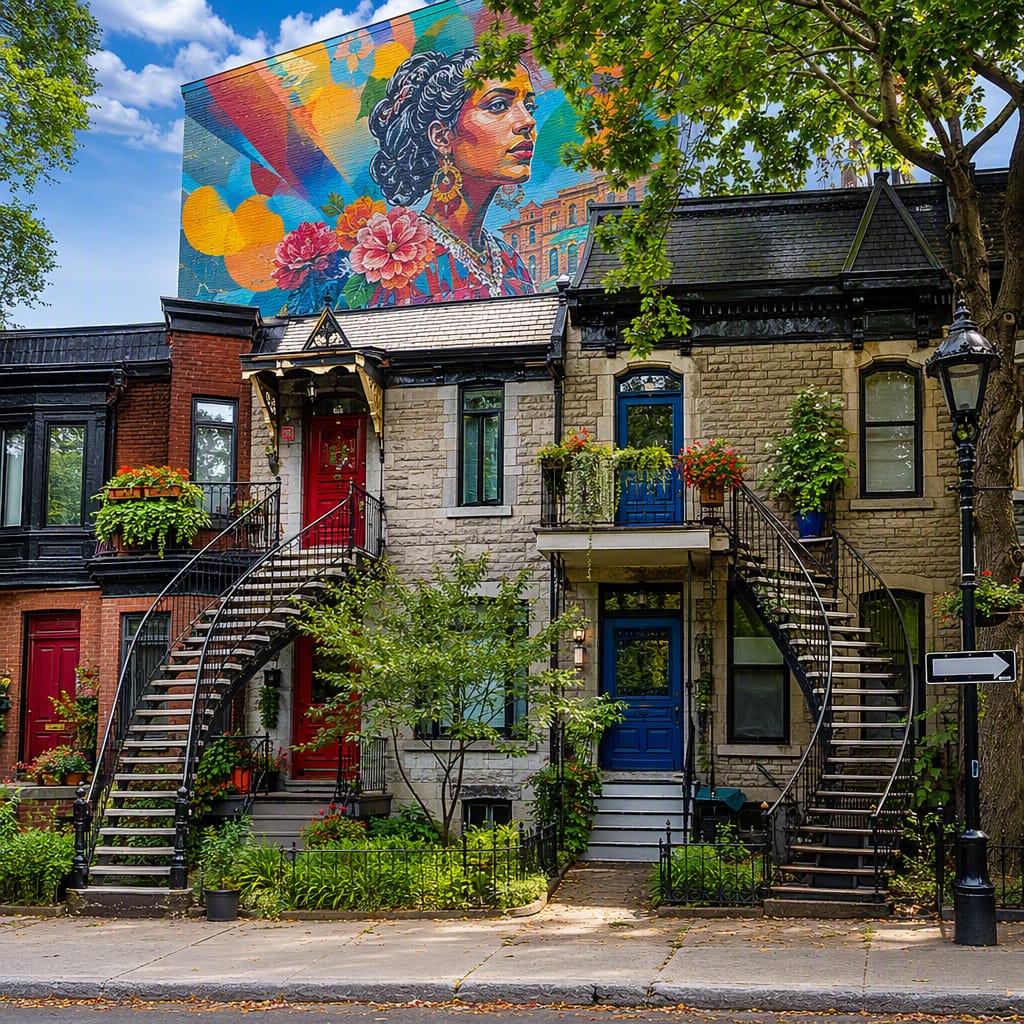 Voyay walking tour
Staircases, Murals, and Plateau Life
A colorful walk through duplexes, green lanes, and street art
12 stops · 239 min · 10.2 km · Free
 Voyay walking tour
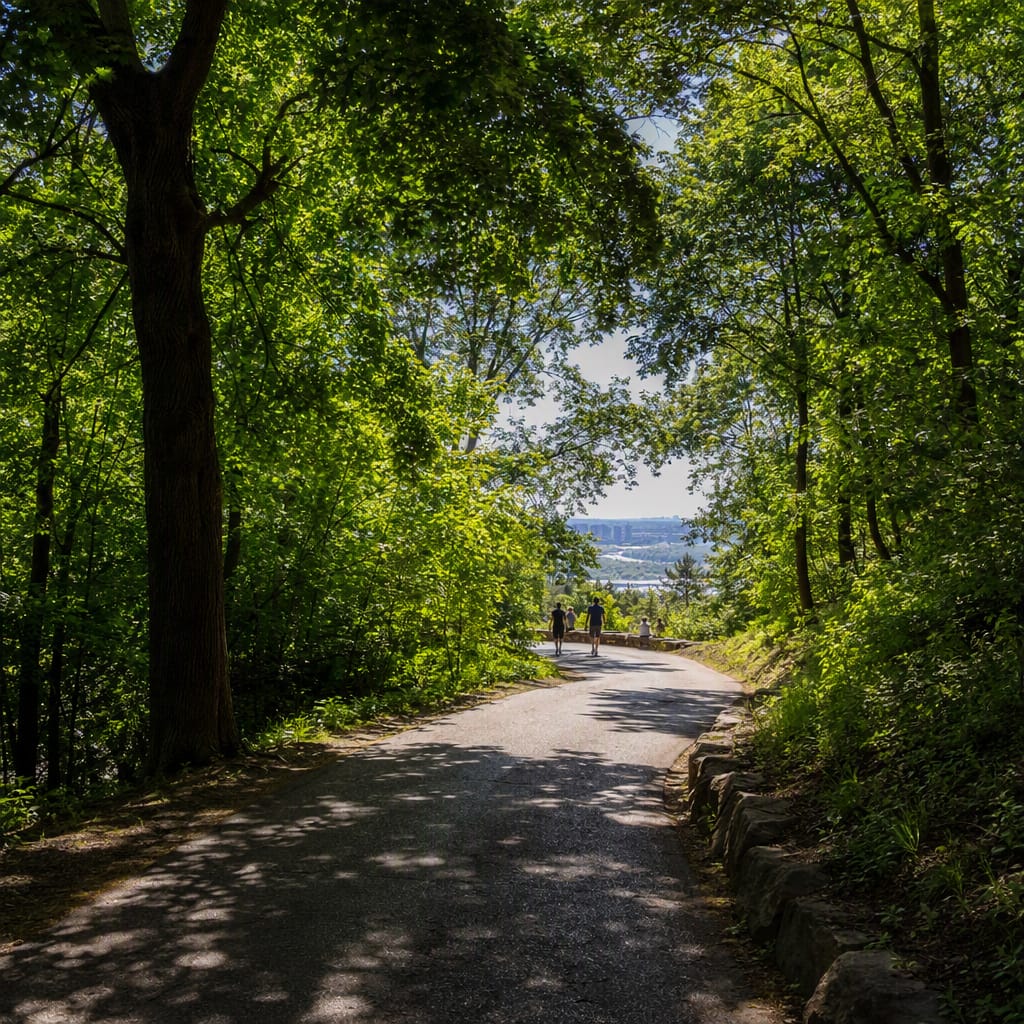
Mount Royal’s Forest Reveals
Climb Olmsted’s mountain through forests, lookouts and conservation stories
7 stops · 105 min · 3.3 km · Free
 Voyay walking tour
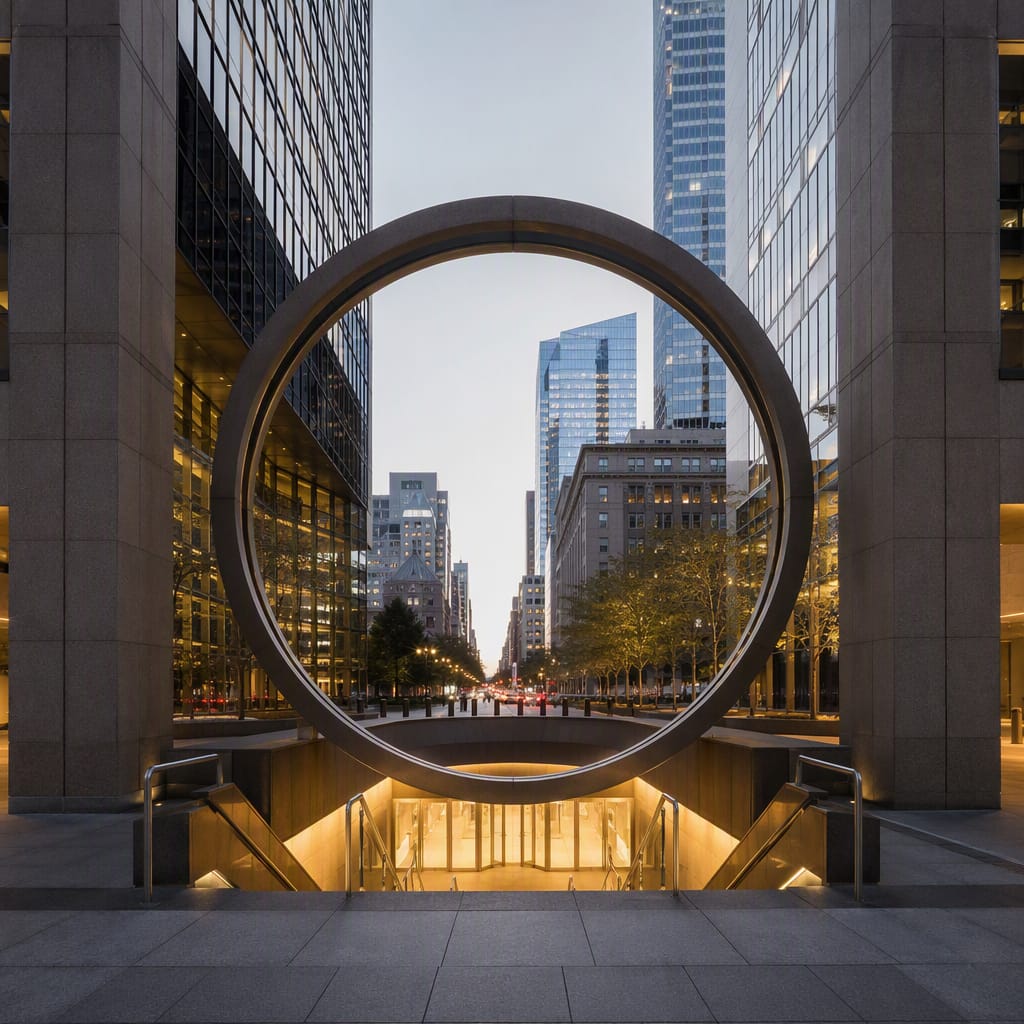
Beneath Montreal’s Modernist Giants
Explore hidden corridors, civic art, transit hubs, and soaring towers
11 stops · 144 min · 3.9 km · Free