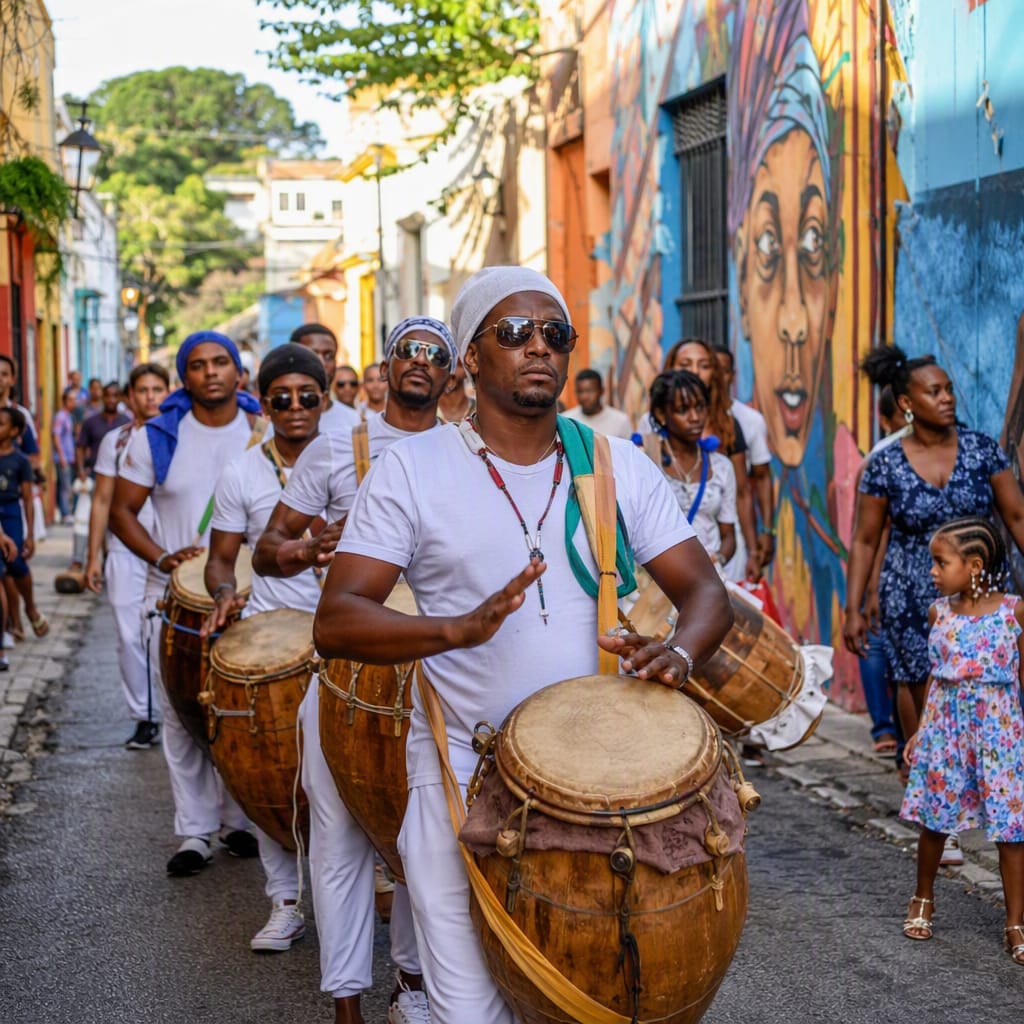
Following Montevideo’s Candombe Memory
Courtyards, murals, and streets where Afro-Uruguayan memory keeps moving
- Montevideo, Uruguay
- 11 stops
- 153 min
- 4.6 km
- Culture
Try the first stop

Museo Figari
Painted candombes reveal both cultural recognition and the limits of an outsider’s gaze.
Pedro Figari’s warm, rhythmic paintings helped place candombe within Uruguay’s national imagination. Yet these scenes were reconstructed from memory by a white, upper-class artist rather than recorded as documentary evidence. Explore the galleries while asking whose stories, names, and struggles become blurred when community life is transformed into art.
The route
11 stops, in order.
- Stop 1 · Free sample
Museo Figari
Painted candombes reveal both cultural recognition and the limits of an outsider’s gaze.
- 2Stop 2
Brecha and Camacuá
Ordinary streets preserve the geography of Montevideo’s historic African gathering rooms.
 Stop 3
Cubo del Sur
Fortification remains anchor candombe memory beside Montevideo’s former colonial boundary.
- 4Stop 4
Rambla at Paraguay
A scenic waterfront reveals how redevelopment reshaped Barrio Sur’s community geography.
 Stop 5
Peatonal Curuguaty
Murals and doorways turn an inhabited passage into evolving public memory.
 Stop 6
Plaza Medellín
A neighborhood plaza highlights the everyday labor sustaining comparsa culture.
- 7Stop 7
Mediomundo Conventillo Site
An erased courtyard remains central to Afro-Uruguayan memory, displacement, and return.
- 8Stop 8
Isla de Flores Portal
The traditional Llamadas starting point opens a corridor of drums and belonging.
 Stop 9
Barrio Reus al Sur
Palermo’s Ansina landscape connects workers’ housing, forced removal, and enduring identity.
 Stop 10
Casa de la Cultura Afrouruguaya
A community institution centers Afro-Uruguayan voices, rights, memory, and contemporary life.
- 11Stop 11
Llamadas Route at Minas
The parade corridor ends here, while candombe continues through Palermo’s community life.
The app guides you from stop to stop with GPS and plays each story when you arrive.
More tours in Montevideo
See all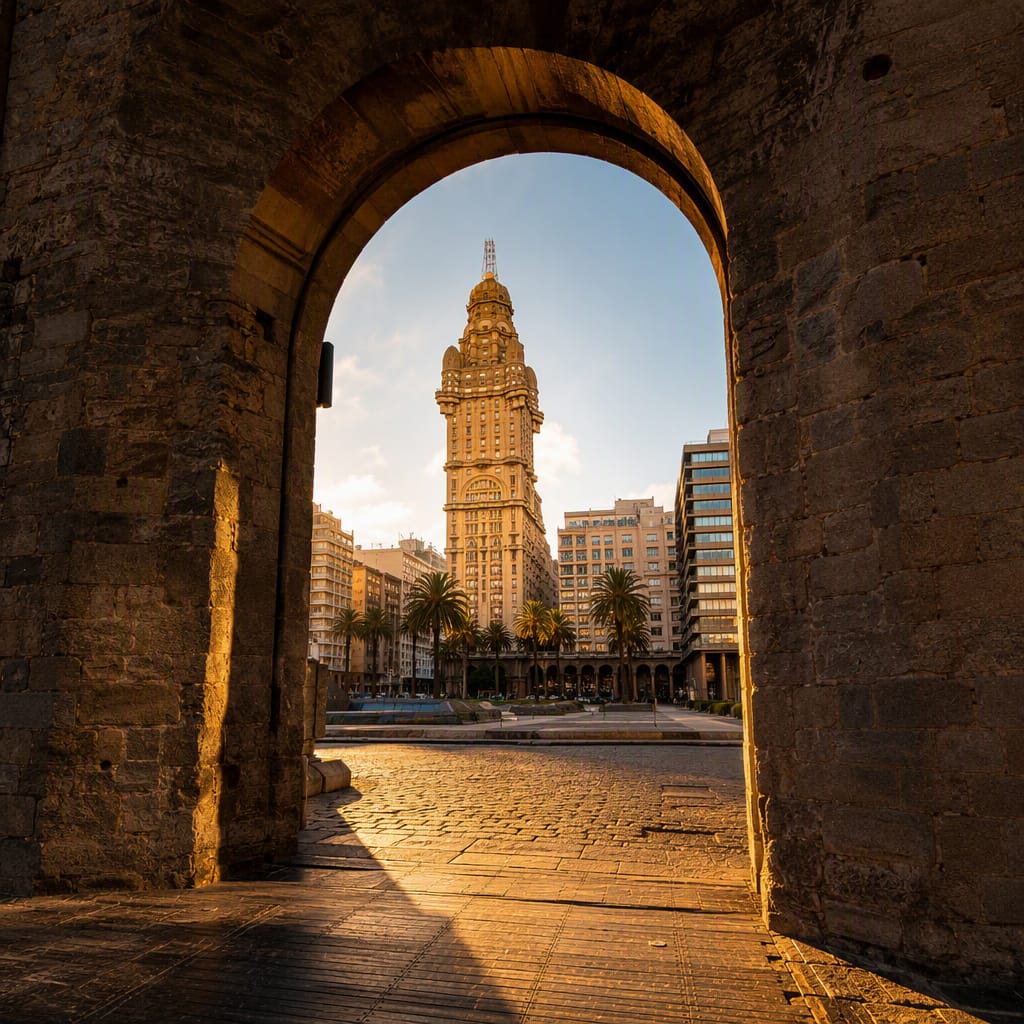 Voyay walking tour
Stones, Banks, and Skyline Ambitions
From Colonial Plazas to Montevideo’s Daring Art Deco Skyline
12 stops · 166 min · 4.9 km · Free
 Voyay walking tour
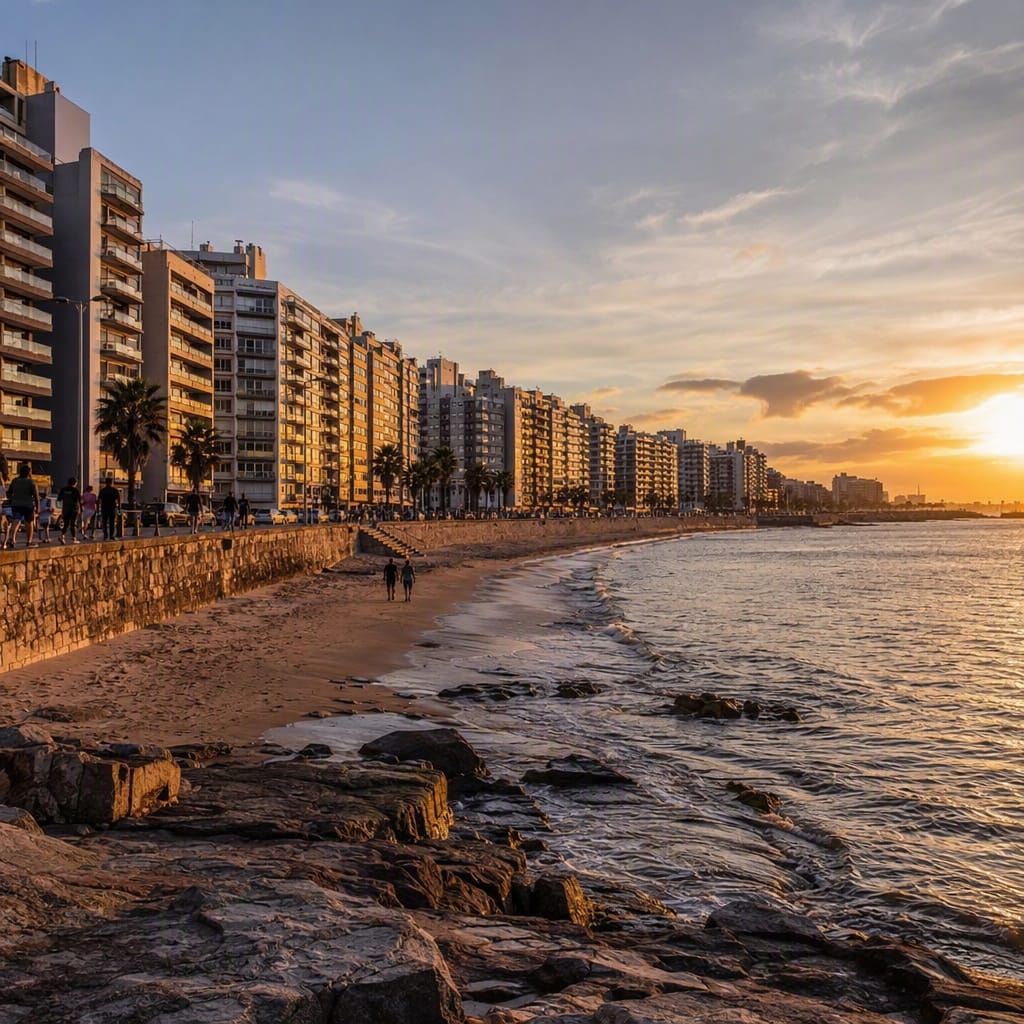
Pocitos: Villas to Vertical Living
Trace beach rituals and bold modernism along Montevideo’s beloved waterfront
11 stops · 157 min · 4.9 km · Free
 Voyay walking tour
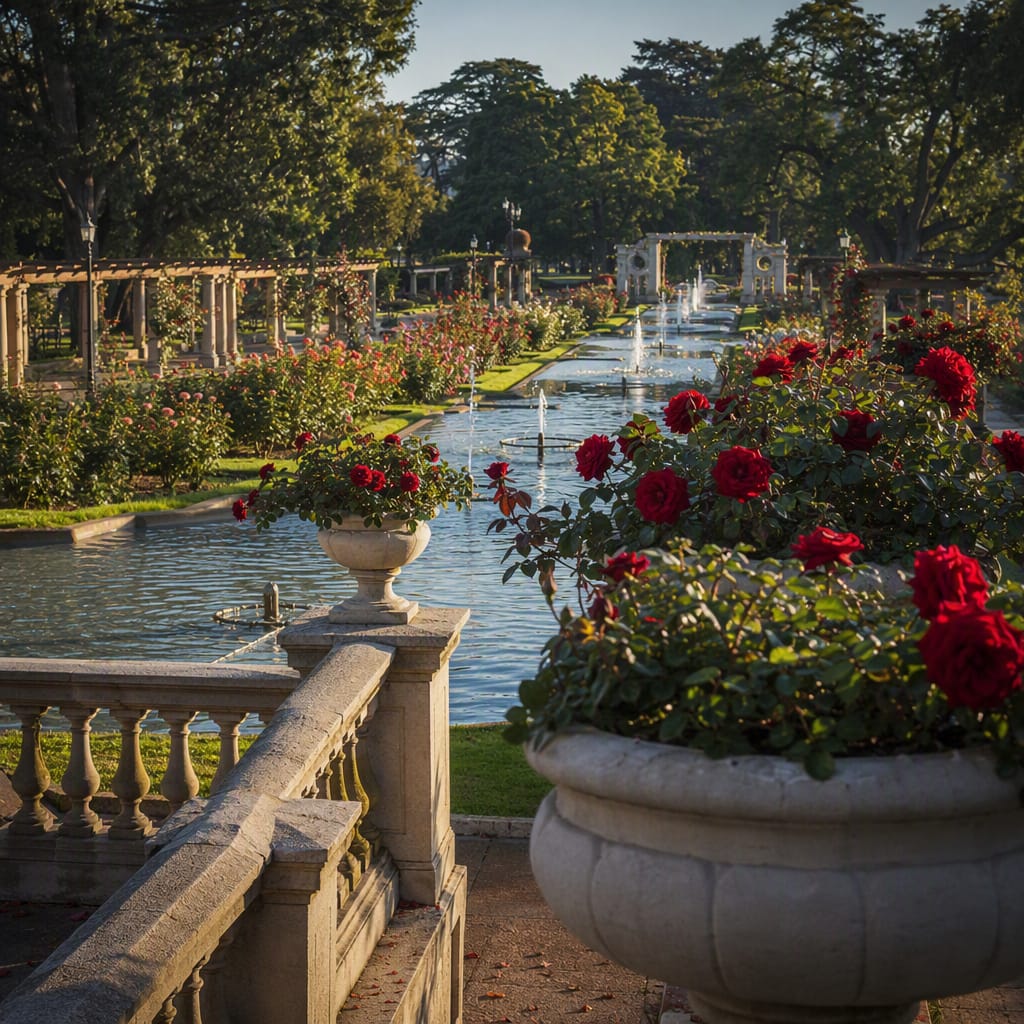
Roses and Villas of Prado
Stroll through Belle Époque gardens, grand estates, and living history
10 stops · 145 min · 4.7 km · Free