Revolutionary Cairo on Foot
Follow the squares, cafés, and institutions that powered Egyptian protest
- Cairo, Egypt
- 11 stops
- 151 min
- 4.1 km
- History
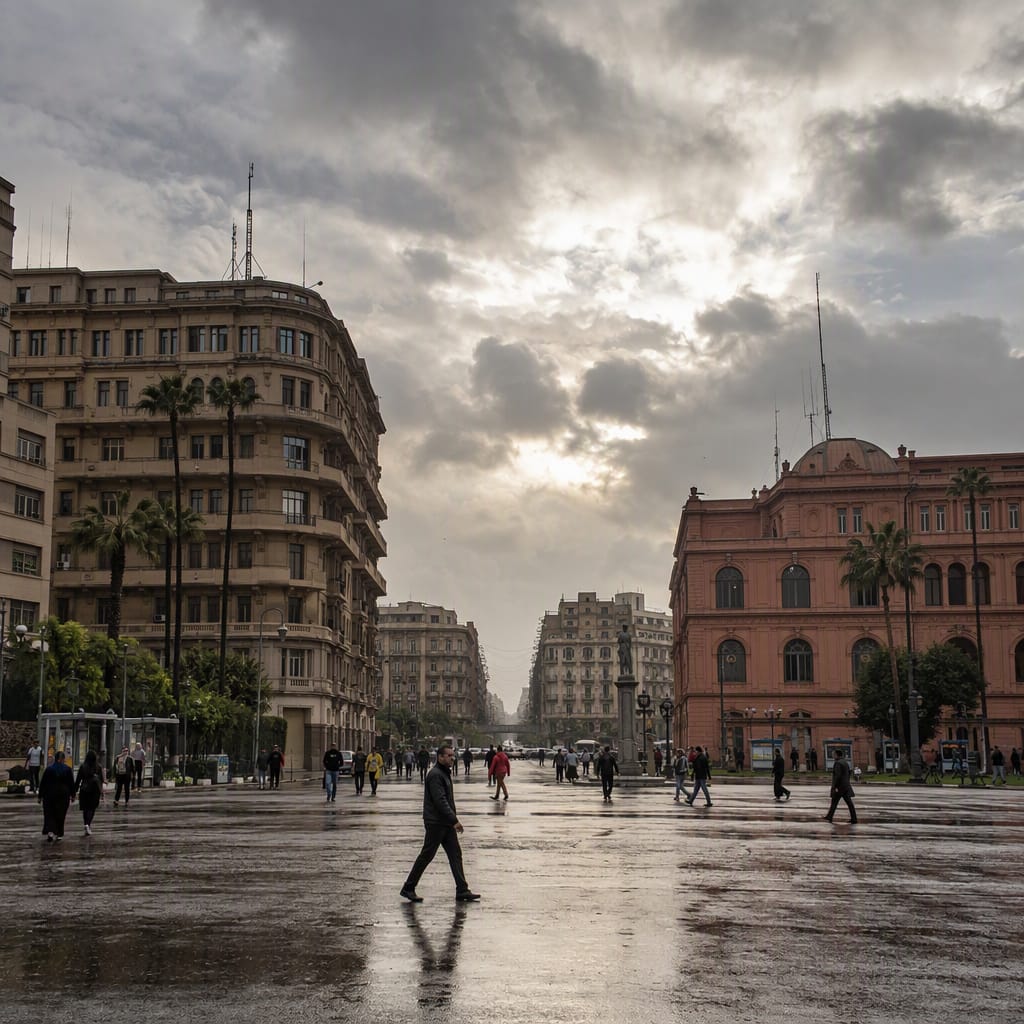
Try the first stop

Saad Zaghloul Mausoleum
A nationalist leader’s tomb reveals how revolution became public memory and ritual.
Across from the Zaghloul family home, this memorial shows how the leader of 1919 became a national symbol after his death. Its story is less about the monument itself than the political struggle over Zaghloul’s legacy. Amid neighborhood traffic, consider how revolutionary memory shifts from popular movement to official commemoration.
The route
11 stops, in order.
- Stop 1 · Free sample
Saad Zaghloul Mausoleum
A nationalist leader’s tomb reveals how revolution became public memory and ritual.
- Stop 2
Bayt al-Umma
The household where private organizing became the public voice of 1919.
 Stop 3
Mohamed Mahmoud Street
This narrow street carries the unfinished story of Egypt’s 2011 revolution.
 Stop 4
Omar Makram Mosque
A mosque beside Tahrir became a refuge, clinic, and place of mourning.
 Stop 5
Tahrir Square
Egypt’s defining protest square briefly became a self-organized city of resistance.
- 6Stop 6
Café Horreya
This lived-in café turned revolutionary aftermath into conversation, debate, and recovery.
 Stop 7
Café Riche
A historic café where anti-colonial intrigue and political conversation shared tables.
 Stop 8
Talaat Harb Square
A crowded downtown crossroads linking protest routes, press networks, and economic nationalism.
- 9Stop 9
Journalists’ Syndicate
These famous steps nurtured the protest coalitions that preceded the 2011 uprising.
- 10Stop 10
Egyptian Bar Association
Lawyers connected the revolutions through strikes, defense, petitions, and organized dissent.
- 11Stop 11
Al-Ahram Headquarters
Egypt’s landmark newspaper shows how power shapes and reshapes public narratives.
The app guides you from stop to stop with GPS and plays each story when you arrive.